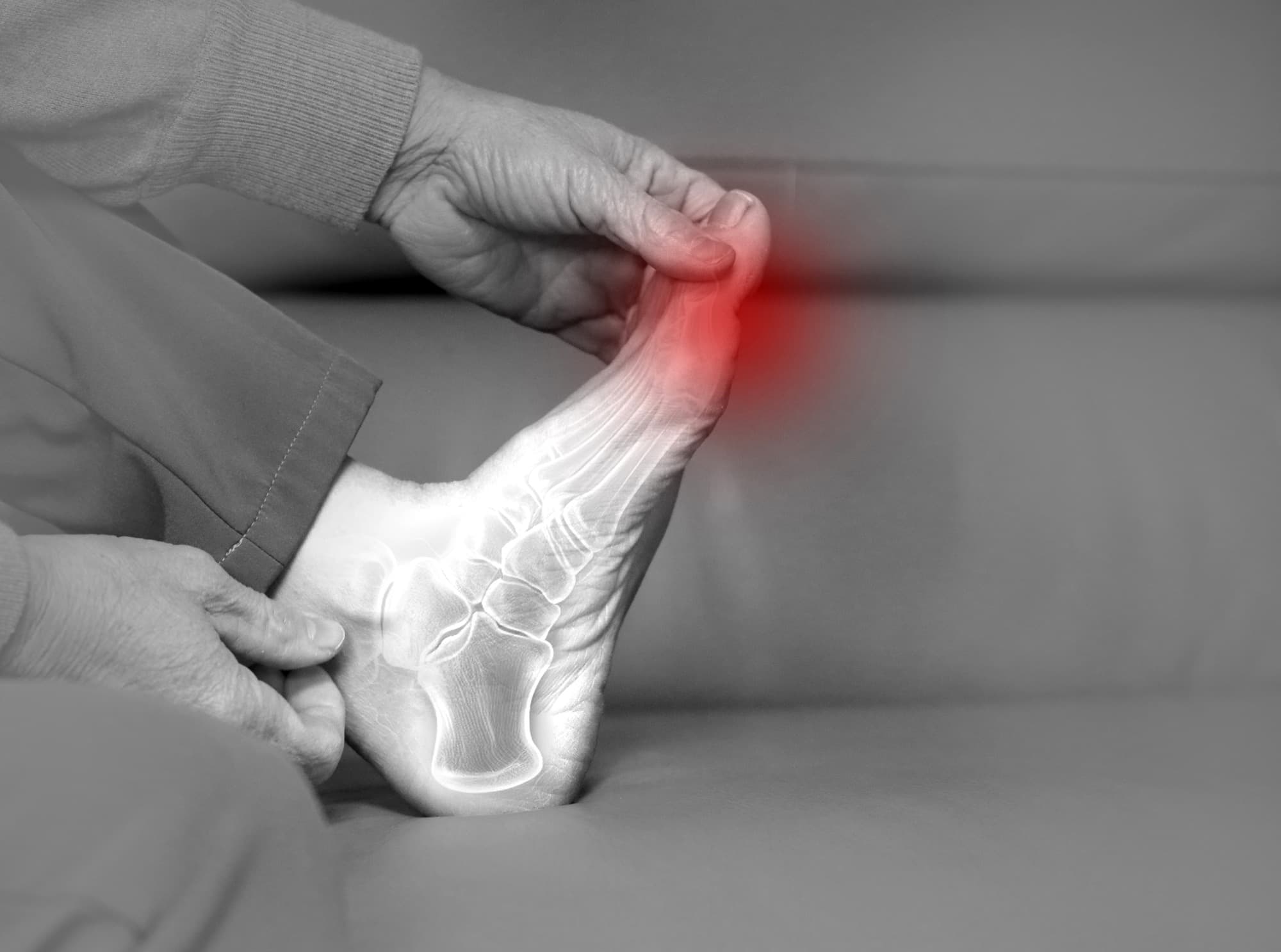


TL;DR: Diabetic peripheral neuropathy starts in the longest nerves, which is why it begins in the toes and works upward in a stocking pattern, usually on both sides. Chronic high blood glucose is the best-established risk factor, so glucose management is the foundation of everything else. The American Diabetes Association’s Standards of Care in Diabetes—2026 says to evaluate for peripheral neuropathy at diagnosis in type 2 diabetes and five years after diagnosis in type 1, then annually. And the symptom people worry about least — numbness — is the one that causes the most harm.
Why It Starts in the Feet
The nerves running to your toes are the longest in the body, and they are the most vulnerable to metabolic injury. Damage accumulates at the far end first and progresses proximally. That produces the characteristic stocking-and-glove distribution: toes, then feet, then ankles and lower legs, and only much later the fingertips and hands.
Two features of that pattern are diagnostically useful. It is typically symmetrical — both feet, roughly equally. And it is distal. Numbness in one foot only, or a pattern that follows a single nerve or a strip down the leg, suggests something other than diabetic distal symmetric polyneuropathy — a compressed nerve root, for instance, which is a different problem entirely and is covered in our guide to nerve pain in the leg.
What It Feels Like
Symptoms fall into two groups, and they behave very differently.
Positive symptoms — burning, tingling, electric or stabbing pain, hypersensitivity where a bedsheet on the feet becomes intolerable. These are frequently worse at night. They are distressing, and they are what brings people in.
Negative symptoms — numbness, reduced sensation, a feeling of walking on cotton wool or with socks on, and loss of balance in the dark when you cannot use vision to compensate. These are quiet, easy to dismiss, and far more dangerous.
That asymmetry is the most important thing to take away. A foot that hurts announces itself. A foot that feels nothing will not tell you about the blister from a new shoe, the pebble that has been in your sock all day, or the small cut that is now infected. Loss of protective sensation is the mechanism behind most diabetic foot ulcers, and it is why the screening below exists.
When You Should Be Screened
The ADA Standards of Care in Diabetes—2026 is specific about timing, and the two types differ:
- Type 2 diabetes: evaluate for peripheral neuropathy at diagnosis. Type 2 is often present for years before it is found, so nerve damage can already exist on day one.
- Type 1 diabetes: assess five years after diagnosis.
- Both: annually thereafter.
Separately, everyone with diabetes should have a comprehensive foot examination at least annually, and more often if they are in a higher-risk category.
What the Foot Exam Actually Checks
It looks trivial and it is not. The examination assesses for loss of protective sensation using the 10-gram monofilament or the Ipswich touch test, together with at least one other neurological assessment — pinprick, temperature perception, ankle reflexes, or vibration with a 128-Hz tuning fork.
The reason for pairing tests is that different fibres carry different sensations, and a single test can miss early damage. The monofilament is a calibrated filament pressed until it buckles; if you cannot feel it at defined sites, you have lost protective sensation, and your risk of ulceration has changed materially. That result should change your footwear, your daily foot checks, and how often you are seen.
What Can Be Done
Glucose management is the foundation. Chronic hyperglycaemia is the best-established risk factor associated with microvascular complications, neuropathy among them. Nothing downstream substitutes for it, and it is why neuropathy care that ignores your A1c is incomplete care. If weight is part of that picture, medically supervised weight management is handled in the same office.
Rule out the other contributors. Diabetes is the most common cause, but it is not the only one, and people can have more than one. Vitamin B12 deficiency — notably common in long-term metformin users — thyroid disease, alcohol, kidney disease and certain medications all deserve consideration. That is a lab question, and it is one worth asking rather than assuming.
Protect the feet. Daily visual checks including between the toes and the soles, using a mirror if reaching is difficult; never barefoot, indoors or out; shake out shoes before putting them on; check water temperature by hand or thermometer rather than by foot; and treat any new blister, crack or colour change as something to be seen for promptly rather than watched.
Balance and falls. Reduced sensation means reduced feedback about where your feet are, which is why balance degrades and why it is noticeably worse in the dark. Balance-focused physical therapy addresses a risk that medication does not touch.
Symptom management and clinic-based options. The burning and night pain are treatable and are worth treating on their own terms. Our neuropathy programme in Addison is a structured multi-modal protocol, and the coverage split is worth knowing before you start: office visits, labs, physical therapy and any EMG or nerve conduction testing may be billable to insurance (BCBS, Medicare, UHC, Cigna), while the protocol modalities are cash-pay. Individual results vary. Our full guide to peripheral neuropathy treatment options goes through what each part involves.
When to Be Seen Sooner
- Any new foot wound, blister, or area of redness or warmth when you have reduced sensation. This is the one not to wait on.
- Rapid onset or rapid progression. Diabetic neuropathy is usually slow; a fast change suggests a different or additional cause.
- Marked asymmetry, or weakness rather than sensory change.
- Symptoms starting in the hands before the feet — that is out of pattern.
- Falls, or new unsteadiness in the dark.
Where We Fit
Charles Ortega, PA-C manages neuropathy alongside primary care and weight management at our Addison, TX clinic, which for this condition is the point — the nerves, the glucose, the labs and the feet are one problem, not four referrals. Call (214) 233-3094 or request an appointment.
When should I be screened for diabetic neuropathy?
The ADA Standards of Care in Diabetes—2026 recommends evaluating for peripheral neuropathy at diagnosis in type 2 diabetes and five years after diagnosis in type 1, then annually in both. Separately, everyone with diabetes should have a comprehensive foot examination at least annually, and more frequently if they are in a higher-risk category.
What is the 10-gram monofilament test?
It is a calibrated filament pressed against defined sites on the foot until it buckles. If you cannot feel it, you have lost protective sensation and your risk of foot ulceration is meaningfully higher. Guidance is to use it alongside at least one other neurological assessment — pinprick, temperature, ankle reflexes, or vibration with a 128-Hz tuning fork — because different tests detect different nerve fibres.
Can diabetic neuropathy be reversed?
Established nerve damage is generally not reversed. Chronic high blood glucose is the best-established risk factor for microvascular complications including neuropathy, so glucose management is the foundation of slowing progression, and symptoms such as burning and night pain can often be managed. It is also worth ruling out contributors other than diabetes — B12 deficiency, thyroid disease, alcohol, kidney disease and some medications — since several of those are treatable in their own right.
Why is numbness more dangerous than pain?
Pain protects you: it tells you a shoe is rubbing or something is caught in your sock. Numbness removes that warning system, so blisters, cuts and pressure injuries go unnoticed until they are infected. Loss of protective sensation is the mechanism behind most diabetic foot ulcers, which is why daily foot checks and annual examinations matter most for the people with the fewest symptoms.