
Physical Therapy in Addison, TX
One-on-one physical therapy in the same clinic as our medical providers and orthobiologic procedures (PRP and BMAC), so your care team can coordinate.
Much of Rowena’s work is post-surgical rehabilitation and recovery after motor vehicle accidents (MVA). Whether you’re rehabilitating after surgery, recovering from a car accident, managing chronic pain, coming back from a sports injury, or navigating a federal workers’ compensation claim, our physical therapist Rowena Calleja, PT designs individualized treatment plans.
Why choose Innovare Tx for physical therapy?
Having your physical therapist and medical provider in the same clinic can make it easier to coordinate care. At Innovare Tx, physical therapy is in the same office as orthobiologic medicine and primary care, and your physical therapist and medical provider can talk directly about your plan.
- In the same clinic as orthobiologic medicine (PT is not typically needed after PRP or BMAC)
- Licensed PT who holds a medical degree from the Philippines
- Individualized treatment plans
- One-on-one sessions with a licensed physical therapist every visit
- Insurance accepted — BCBS, Medicare, UHC, Cigna, Aetna, plus Cherry, Affirm, and CareCredit financing
- OWCP care — we see federal employees with CA-1 and CA-2 claims
- Convenient Addison location, just off the Dallas North Tollway
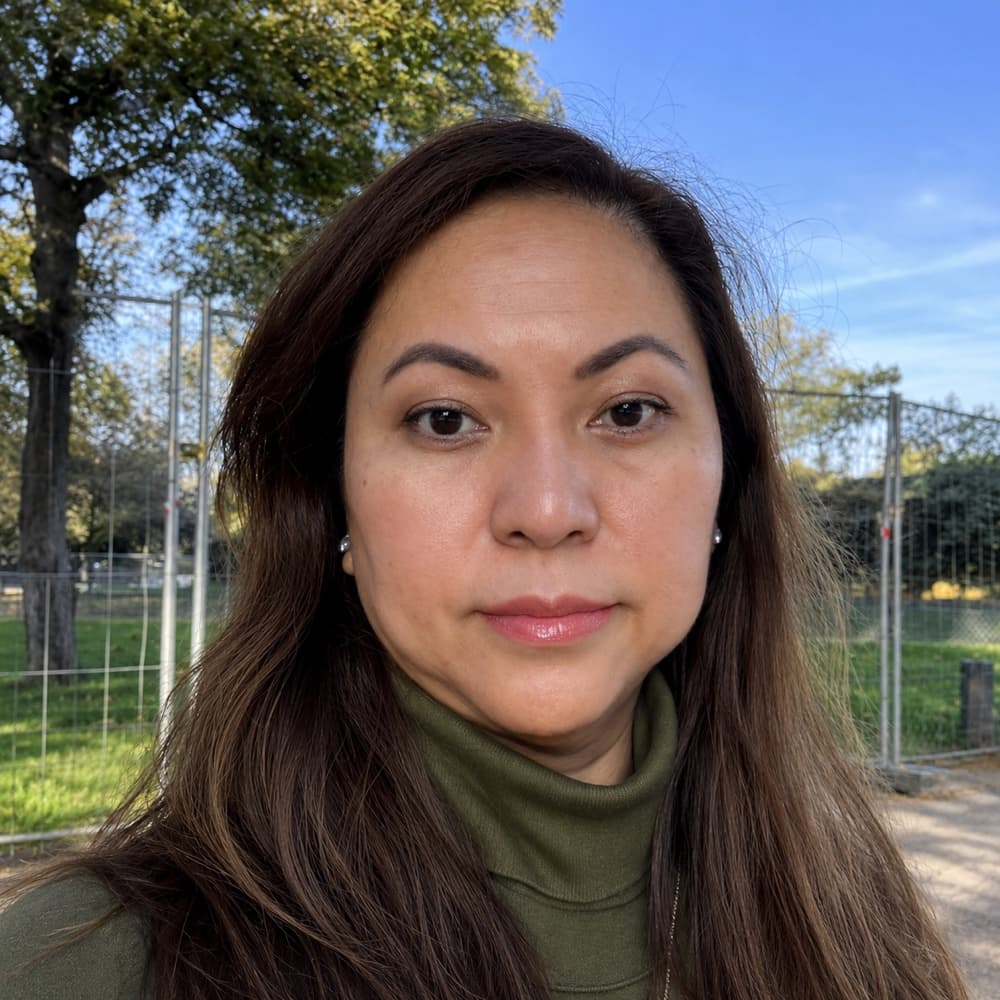
Rowena Calleja, PT
Licensed PT · Medical degree (Philippines) · 7+ years US experience · Mon–Fri 9am–5pm
Rowena brings two kinds of training to your care: a Doctor of Medicine degree earned in the Philippines and a Bachelor of Science in Physical Therapy. In the US she practices as a licensed physical therapist, not as a physician. She earned her B.S. in Physical Therapy from De La Salle University (1997) and her MD from De La Salle University College of Medicine (2003). Her medical education gives her a grounding in the underlying pathology, anatomy, and physiology behind your symptoms. She is ECFMG certified, holds an active Texas Physical Therapy license, and is fluent in English and Tagalog.
7+ years of US physical therapy experience
- Arthritis Knee Pain Centers, Dallas (4.5 years) — knee osteoarthritis rehabilitation, individualized treatment, range-of-motion, strengthening, balance and gait retraining, and custom OA knee brace fitting.
- Herald Rehabilitation LLC (3 years) — chronic low back, cervical, hip, and knee pain rehabilitation.
- Co-Owner, PT Rehabilitation Clinic (Philippines) — co-founded and operated a rehabilitation center, supervising PT interns and treating musculoskeletal and neurological conditions.
Her former supervisor, Brett MacKenzie, VP of Texas Operations at Arthritis Knee Pain Centers, described her as an “exceptional physical therapist” who has “consistently demonstrated professionalism.”
A collaborative approach
Rowena Calleja, PT + Charles Ortega, PA-C, MPAS
Physical therapy for a wide range of conditions
From post-surgical recovery and motor vehicle accident (MVA) injuries to sports injuries, chronic pain, and work-related conditions, our program treats musculoskeletal and neurological conditions across the body.
Sports injuries
- ACL, MCL, and meniscus tears (pre- and post-operative)
- Rotator cuff strains and tears
- Tennis elbow and golfer's elbow
- Ankle sprains and instability
- Hamstring and quad strains
- Shin splints and stress fractures
- Sports concussion — vestibular and balance rehab
Searching for sports physical therapy in Dallas? We’re minutes from North Dallas, Farmers Branch, Carrollton, and Plano with easy Tollway access. Sports PT in Addison
Post-surgical rehabilitation
- Total knee replacement rehab
- Total hip replacement rehab
- Rotator cuff repair recovery
- ACL reconstruction rehab
- Spinal fusion and laminectomy recovery
- Carpal tunnel release rehabilitation
Chronic pain conditions
- Low back pain and sciatica
- Neck pain, whiplash, and cervical radiculopathy
- Motor vehicle accident (MVA) and auto-injury recovery
- Degenerative disc disease
- Osteoarthritis (knee, hip, shoulder, spine)
- Fibromyalgia and myofascial pain syndrome
Workplace & neuropathy-related issues
- Repetitive strain injuries (carpal tunnel, tendonitis)
- Back injuries from lifting, bending, or twisting
- Slip-and-fall and return-to-work functional rehab
- Balance deficits and fall prevention
- Gait abnormalities from peripheral neuropathy
- Coordination and proprioception retraining
Federal employees: learn about your OWCP rights
A multi-modal approach, tailored to you
We don't rely on a single modality. Rowena selects and combines techniques based on your diagnosis, recovery phase, and functional goals — evaluating each condition from both a medical and rehabilitation perspective.
Manual therapy
Joint mobilization and manipulation, soft tissue mobilization, myofascial release, and trigger point therapy — hands-on techniques intended to improve range of motion and ease soft-tissue tension.
Therapeutic exercise & neuromuscular re-education
Progressive programs aim to build strength, flexibility, and endurance and to lower the risk of re-injury through movement pattern work. Neuromuscular re-education is often used for post-surgical patients, returning athletes, and patients with neuropathy.
Gait training & therapeutic modalities
Gait analysis looks for asymmetries and compensations, and your plan works on them. Modalities — electrical stimulation (e-stim), therapeutic ultrasound, heat and cold therapy, and TENS — are used where they fit the condition and may help ease symptoms. For knee and hip osteoarthritis specifically, the ACR’s 2026 update to its osteoarthritis guideline conditionally recommends heat and cold and conditionally recommends against TENS.
For some stubborn tendon and heel problems, the clinic also offers focused shockwave therapy, planned by a provider after an evaluation. It can be combined with physical therapy when that makes sense.
Functional movement screening
Before we treat, we assess how you move through fundamental patterns, where you have mobility restrictions or stability deficits, and which compensations contribute to your pain. This information guides your plan.
Physical therapy and orthobiologic procedures in one clinic
Physical therapy is not typically needed after PRP or BMAC, which are completed in one office visit. If your provider decides that rehabilitation would help in your case, our team can provide it in the same clinic.
Why coordination matters
When your physical therapist and medical provider are in the same clinic, they can talk directly about your care. That coordination can mean:
- One coordinated plan — your PT and your provider share the same chart
- Rehab planned around your condition and your provider's guidance
- Adjustments to your plan as needed
- Fewer redundant appointments across separate offices
PRP, PPP, BMAC, and A2M are autologous procedures prepared from your own blood or bone marrow. They are considered investigational and are not FDA-approved for the treatment of any specific orthopedic condition, including osteoarthritis. Individual results are not guaranteed. Any decision to pursue an orthobiologic procedure should be made with your provider after a clinical evaluation.
Federal workers’ compensation physical therapy
OWCP — federal employees
If you’re a federal employee injured on the job — whether you work for USPS, TSA, DHS, CBP, DOD, the VA, or any other federal agency — FECA gives you an initial choice of physician, and physical therapy needs authorization from the Office of Workers’ Compensation Programs (OWCP). Changing physicians after your initial choice requires OWCP’s written approval. Dr. Nathan Nguyen, MD serves as treating physician on OWCP cases, and Charles Ortega, PA-C has experience with CA-1 (traumatic injury) and CA-2 (occupational disease) claims.
- File your claim — submit your CA-1 or CA-2 form through ECOMP or your agency’s process.
- Choose your physician — you have an initial choice; changing later requires OWCP’s written approval.
- Physical therapy evaluation — once authorized, Rowena Calleja, PT conducts an assessment.
- Treatment & documentation — we provide progress reports, functional capacity evaluations, and medical documentation for your claim.
- Return to duty — we work toward a return to work as your treating physician allows.
We treat federal employees under OWCP; we do not accept Texas state workers’ compensation. Learn more about OWCP care at Innovare Tx
OWCP care for federal employees
We help with progress reporting and return-to-duty documentation for federal employees across DFW.
Telehealth physical therapy
Not every visit has to be a drive to Addison. We offer telehealth physical therapy alongside in-person care, and most plans use both: in-person for the evaluation, hands-on treatment and periodic reassessment, remote for the progression sessions in between. Video visits can be useful for progressing your exercise program, correcting technique, education, and sorting out a flare-up quickly instead of waiting for the next opening.
What still happens in the clinic: hands-on assessment, manual therapy, equipment-based work, and the early phases of post-surgical rehabilitation. Under the Texas Board of Physical Therapy Examiners telehealth rule (22 TAC §322.5), your physical therapist is responsible for deciding whether a given evaluation or intervention can be delivered remotely or needs to be done in person — and you must be physically located in Texas at the time of the visit. Visits are live audiovisual sessions, held to the same standard of care as in-person treatment, and we obtain your informed consent before the first one.
Read more about what telehealth physical therapy can and cannot do, or call (214) 233-3094 and we will tell you which parts of your plan can work that way.
What to expect at your first visit
Bring your insurance card, photo ID, and any imaging (X-rays, MRIs) or records related to your condition. Wear comfortable clothing and arrive 15 minutes early for intake (or complete it online). Your first session is a 60-minute evaluation. Rowena Calleja, PT will:
- Listen to your story — onset, aggravating factors, struggles, and goals
- Perform a physical exam — range of motion, strength, flexibility, joint stability, neurological function, and functional movement
- Review imaging reports and history — correlating exam findings with X-ray or MRI reports and prior diagnoses
- Develop your treatment plan — goals, frequency, estimated duration, techniques, and modalities
- Begin treatment — most patients receive hands-on care during the first visit
Ongoing sessions (45–60 minutes) include one-on-one time with your physical therapist, manual therapy, guided exercise, modalities as needed, home exercise progression, and progress re-assessments every 4–6 visits.
Wondering whether to try therapy first? PT vs. surgery for knee & shoulder pain
If it is a knee, therapy is step two of a defined pathway rather than a standalone referral. See knee physical therapy and the Knee Program
| Condition | Duration | Frequency |
|---|---|---|
| Acute sports injury | 4–8 weeks | 2–3×/week |
| Post-surgical rehab | 8–16 weeks | 2–3×/week |
| Chronic pain | 6–12 weeks | 1–2×/week |
| Workers' comp injury | 6–12 weeks | 2–3×/week |
| Neuropathy mobility | 8–12 weeks | 2×/week |
A physical therapist near you in Dallas
Our clinic at 16901 Dallas Pkwy, Ste 210, Addison, TX 75001 is conveniently located off the Dallas North Tollway and I-635 (LBJ Freeway), with free parking. We serve patients across:
Physical therapy FAQs
Talk to our physical therapy team
Book your physical therapy evaluation at our Addison clinic — or call and we'll verify your benefits before you come in. Call to ask about current availability.