TL;DR: Whether you tore your ACL on the soccer field or tweaked your shoulder during a weekend round of golf, sports physical therapy in Addison, TX at Innovare Tx Regenerative & Wellness Clinic is one option to discuss. We see athletes of every level, from competitive to recreational, and use return-to-sport testing to help guide decisions. Results vary.
Behind every sports injury is a person who wants to get back to doing what they love — running a 5K, playing in a rec league, chasing their kids around the yard, or competing.
If you’re dealing with a sports injury in the Dallas–Fort Worth area, our physical therapist Rowena Calleja, PT has experience in sports rehabilitation. Here’s what it involves and when to get evaluated.
Why Sports Injuries Need Specialized Physical Therapy
A general PT program designed for post-surgical hip replacement recovery looks nothing like the rehab protocol an athlete needs after an ACL tear.
Sports physical therapy focuses on:
- Sport-specific movement patterns — retraining the exact motions your body needs for your activity
- Performance benchmarks — objective criteria to clear you for return to sport, not just “feeling better”
- Injury risk — looking at biomechanical factors that may have contributed
- Progressive loading — gradually building tissue tolerance
At Innovare Tx, we ask about your goals, your sport’s demands, and your schedule.
Common Sports Injuries We Treat in Addison, TX
Our sports rehab program at Innovare Tx addresses a wide range of injuries that sideline athletes across the DFW area. Here are the most common conditions we see:
ACL and MCL Injuries
Anterior cruciate ligament (ACL) and medial collateral ligament (MCL) injuries are among the most feared diagnoses for any athlete. Whether you need ACL rehab in Addison after surgical reconstruction or a conservative treatment plan for a partial MCL tear, Rowena Calleja designs progressive protocols focused on stability, strength, and confidence in your knee.
Rotator Cuff Tears and Shoulder Injuries
Overhead athletes — swimmers, baseball players, tennis players, CrossFitters — are especially vulnerable to rotator cuff strains and tears. Our shoulder rehab programs focus on scapular stability, rotator cuff strength, and range of motion.
Ankle Sprains and Instability
Some ankle sprains lead to lingering instability or repeat injuries. We use balance training, proprioceptive exercises, and progressive strengthening.
Runner’s Knee (Patellofemoral Pain Syndrome)
Runner’s knee affects everyone from marathon veterans to weekend joggers. We assess hip strength, foot mechanics, training load, and running form.
Tennis Elbow and Golfer’s Elbow
Lateral epicondylitis (tennis elbow) and medial epicondylitis (golfer’s elbow) don’t just affect racket sport players. These repetitive strain injuries are common in golfers, weightlifters, and anyone who grips frequently. We use eccentric loading programs, manual therapy, and activity modification.
Stress Fractures
Stress fractures require careful management. Return too soon, and you risk a complete fracture. We guide athletes through the healing timeline with cross-training strategies, gradual return-to-impact protocols, and biomechanical assessments to identify why the fracture happened.
Meet Rowena Calleja, PT
Rowena Calleja, PT is the physical therapist at Innovare Tx and has experience in musculoskeletal rehabilitation, sports injuries, and chronic pain.
What physical therapy with Rowena includes:
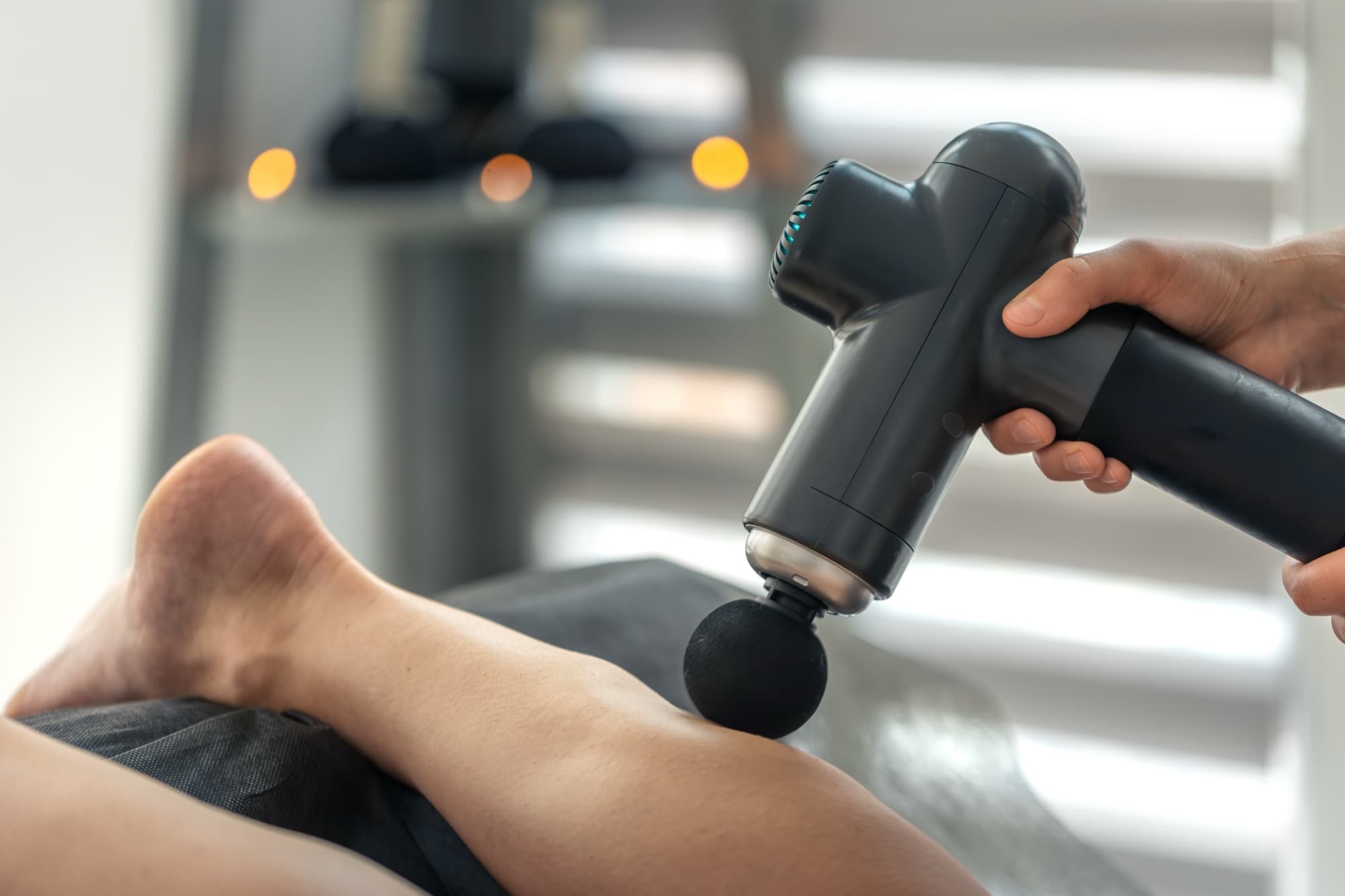
- Hands-on manual therapy combined with evidence-based exercise programming
- Individualized treatment plans
- Sport-specific return-to-play testing before clearance
- Collaboration with Charles Ortega, PA-C for integrated care when an autologous orthobiologic procedure may be an appropriate option
- OWCP rehabilitation for federal employees injured on the job (we do not accept Texas state workers’ compensation)
Rowena works with patients to set realistic goals and track measurable progress.
Our Return-to-Sport Protocol
At Innovare Tx, we follow a structured return-to-sport physical therapy protocol with objective benchmarks.
Phase 1: Pain and Inflammation Management
- Reduce swelling and pain through manual therapy, modalities, and activity modification
- Protect healing tissues while maintaining fitness in unaffected areas
- Begin gentle range-of-motion exercises
Phase 2: Mobility and Strength
- Progressive strengthening of the injured area and surrounding muscle groups
- Work on range of motion
- Address compensatory movement patterns that developed during the injury
Phase 3: Sport-Specific Training
- Introduce agility, plyometrics, and sport-specific drills
- Increase training volume and intensity gradually
- Simulate game-day demands in a controlled environment
Phase 4: Return-to-Play Testing and Clearance
- Objective strength testing comparing injured and uninjured sides
- Functional movement screens — assessing landing mechanics, cutting, and deceleration
- Psychological readiness — confidence in the injured area
We use these checks with your provider to help decide when you return to full activity.
Sports PT and Orthobiologic Procedures in One Clinic
Innovare Tx offers autologous orthobiologic procedures and physical therapy in the same clinic.
At Innovare Tx, Rowena Calleja works alongside Charles Ortega, PA-C, MPAS — an NCCPA-certified Physician Assistant with 27 years of medical experience who offers autologous orthobiologic procedures like PRP (Platelet-Rich Plasma) and BMAC (Bone Marrow Aspirate Concentrate).
What PRP Is and How the Procedure Works
PRP is an autologous procedure: a small sample of your own blood is drawn, spun in a centrifuge to concentrate the platelet fraction, and delivered by injection with image guidance — all in the same visit. Because the material comes from you, allergic reaction or rejection is less of a concern, though any injection carries risks.
PRP, PPP, BMAC, and A2M are considered investigational and are not FDA-approved for the treatment of any specific orthopedic condition. Whether an orthobiologic procedure is an appropriate option for you is a decision to make with your provider after a clinical evaluation. Physical therapy is not typically needed after PRP or BMAC. If your provider decides it would help in your case, your physical therapy can happen in the same clinic.
Your providers can communicate directly about your care plan.
Prevention and Performance Optimization
Beyond treating injuries, physical therapy can look at injury risk and how you train. This can include:
- Biomechanical assessments — look for movement patterns that may contribute to injury
- Pre-season screening — look for weaknesses
- Strength and conditioning guidance — sport-specific programming
- Running gait analysis — for runners dealing with recurring pain or wanting to improve efficiency
- Post-season recovery programs — structured off-season rehab to address accumulated wear and tear
Ask us which of these fit your training.
Who Should Consider Sports Physical Therapy?
Sports PT isn’t just for elite athletes. It may be worth discussing if any of these apply to you:
- You’ve been injured during sports, exercise, or recreational activity
- You had surgery (ACL reconstruction, rotator cuff repair, meniscus) and need rehab
- You have chronic or recurring pain related to your sport
- You’ve been cleared by a doctor but still don’t feel “right”
- You want to prevent injuries before they happen
- You’re a weekend warrior who wants to stay active without breaking down
We see competitive athletes, recreational players, fitness enthusiasts, and active adults.
Insurance and Affordability
Innovare Tx accepts:
- Blue Cross Blue Shield (BCBS)
- Medicare
- UnitedHealthcare (UHC)
- Cigna
- OWCP for federal employees (not Texas state workers’ compensation)
We also offer Cherry, Affirm, and CareCredit financing for services insurance does not cover (eligibility is not guaranteed), and wellness memberships.
Military and law enforcement discounts apply only to eligible self-pay services, not physical therapy.
Book Your Sports PT Evaluation in Addison, TX
Rowena Calleja, PT and the Innovare Tx team can talk through your options.
Visit us at 16901 Dallas Parkway, Suite 210, Addison, TX 75001, call (214) 233-3094, or email contact@innovaretx.com. We offer convenient scheduling for athletes and active adults across Addison, North Dallas, Plano, Frisco, Richardson, and the greater DFW metroplex.
Contact us today to schedule your sports PT evaluation.
How long does sports physical therapy take after an ACL injury?
ACL rehab after surgical reconstruction often takes many months. The timeline depends on graft type, surgical technique, and your surgeon’s protocol. At Innovare Tx, we use return-to-sport testing, including strength symmetry and functional movement screens, to help guide that decision.
Do I need a referral to see a sports physical therapist in Texas?
Texas allows direct access to a physical therapist without a referral for a limited time: 10 consecutive business days, or 15 for therapists with certain added qualifications, when the therapist meets the conditions in Tex. Occ. Code § 453.301. After that a referral is needed, and your insurance plan may require one sooner. Our team can check your benefits before your first visit.
How does PRP fit into sports injury care at Innovare Tx?
PRP (Platelet-Rich Plasma) is an autologous procedure prepared from a small sample of your own blood — platelets are concentrated in a centrifuge and delivered by injection with image guidance in the same visit. PRP, PPP, BMAC, and A2M are considered investigational and are not FDA-approved for the treatment of any specific orthopedic condition. At Innovare Tx, when an orthobiologic procedure is appropriate after a clinical evaluation, Charles Ortega, PA-C performs it. Physical therapy is not typically needed afterward; if your provider decides it would help, Rowena Calleja, PT is in the same clinic.
What’s the difference between regular physical therapy and sports physical therapy?
Sports physical therapy focuses on athletes returning to their sport. Unlike general PT, sports rehab includes sport-specific drills, agility training, plyometrics, and objective return-to-play testing. The goal is to work on the speed, strength, and confidence you need for your sport.
How much does sports physical therapy cost with insurance?
The cost of sports PT varies based on your insurance plan, deductible, and copay structure. We accept BCBS, Medicare, UHC, and Cigna at Innovare Tx. Deductibles and copays depend on your plan. For services insurance does not cover, Cherry, Affirm, and CareCredit financing may be available; eligibility is not guaranteed. Call (214) 233-3094 and our team will verify your benefits before your first appointment.
Is sports physical therapy covered by workers’ compensation?
For federal employees, OWCP may pay for authorized physical therapy when the injury is accepted as work-related, such as during required fitness training. Innovare Tx sees federal employees with OWCP claims, including USPS, TSA, DHS, and CBP. We do not accept Texas state workers’ compensation.
PRP, PPP, BMAC, and A2M are autologous procedures prepared from your own blood or bone marrow. They are considered investigational and are not FDA-approved for the treatment of any specific orthopedic condition, including osteoarthritis. Individual results are not guaranteed. Any decision to pursue an orthobiologic procedure should be made with your provider after a clinical evaluation.