You’ve been dealing with pain for weeks — maybe months. Your doctor mentions surgery. But a friend tells you physical therapy worked for them. Now you’re stuck asking the question thousands of patients face every year: do I need surgery or PT?
Here’s the truth most people don’t hear: for many common orthopedic conditions, physical therapy vs. surgery outcomes are nearly identical. Research consistently shows that conservative treatment can deliver the same long-term results — without the risks, costs, or downtime of going under the knife.
But that doesn’t mean surgery is never the answer.
At Innovare Tx in Addison, TX, we help patients navigate this exact decision every day. With 27 years of medical experience across orthobiologic medicine and physical therapy, our team takes an evidence-based, conservative-first approach — and we’ll tell you honestly when surgery is the smarter path.
TL;DR: Physical therapy is as effective as surgery for many conditions, including knee osteoarthritis, partial rotator cuff tears, degenerative meniscus tears, mild-to-moderate spinal stenosis, and mild-to-moderate carpal tunnel syndrome. Surgery remains essential for complete ligament/tendon tears, unstable fractures, and structural joint instability. The smartest approach? Start with conservative care, escalate only when necessary.
5 Conditions Where Physical Therapy Matches Surgical Outcomes
Not all injuries require an operating room. Here are five well-studied conditions where research shows conservative treatment vs. surgery produces equivalent results.
1. Knee Osteoarthritis
Arthroscopic “clean-out” surgery was once a common operation for knee osteoarthritis. A randomized trial published in the New England Journal of Medicine in 2008 (Kirkley et al.) found that adding arthroscopic surgery to optimized physical therapy and medical management gave no additional benefit in pain or function at two years.
That finding is about arthroscopy, not knee replacement. For advanced osteoarthritis, a 2015 NEJM trial found knee replacement followed by non-surgical care did better than non-surgical care alone — which is why a structured PT program is the first step, not the only one.
At our clinic: We offer targeted physical therapy and, when a clinical evaluation supports it, an autologous PRP (Platelet-Rich Plasma) procedure using biologic material from your own blood. Whether it is an appropriate option is determined case by case, and individual results vary and are not guaranteed.
2. Rotator Cuff Tears
A 2013 multicenter study in the Journal of Shoulder and Elbow Surgery (the MOON Shoulder Group) followed patients with atraumatic full-thickness rotator cuff tears and found that physical therapy was effective for about 75% of them, who had not had surgery at two-year follow-up.
Partial tears (less than 50% of tendon thickness) respond especially well to progressive strengthening and manual therapy.
3. Degenerative Meniscus Tears
This is a big one. Multiple randomized controlled trials — including a widely cited 2013 NEJM study — concluded that arthroscopic partial meniscectomy offered no benefit over physical therapy for degenerative meniscus tears in patients over 45.
If your MRI shows a meniscus tear and you’re over 40 with no locking or catching, PT is likely your best first step. You can always opt for surgery later if needed.
4. Mild-to-Moderate Spinal Stenosis
Spinal stenosis surgery (laminectomy) carries real risks: infection, nerve damage, failed back surgery syndrome. A 2015 Annals of Internal Medicine study found that patients with lumbar spinal stenosis who chose PT had comparable outcomes to surgical patients at two years, particularly those with mild-to-moderate narrowing.
A structured program focusing on flexion-based exercises, core stabilization, and manual therapy can significantly reduce symptoms.
5. Mild-to-Moderate Carpal Tunnel Syndrome
Before scheduling a carpal tunnel release, consider this: a 2017 study in the Journal of Orthopaedic & Sports Physical Therapy found that manual physical therapy was as effective as surgery for mild-to-moderate carpal tunnel syndrome at 12-month follow-up.
PT for carpal tunnel includes nerve gliding exercises, manual therapy, ergonomic modifications, and splinting.
When Surgery IS the Right Choice
We believe in conservative care first — but we also believe in honesty. Some injuries and conditions genuinely require surgical intervention. Non-surgical care has its limits.
Surgery Is Typically Necessary For:
- Complete tendon or ligament tears — A fully ruptured ACL in an active patient, or a complete rotator cuff tear, usually requires surgical repair to restore function.
- Unstable fractures — Displaced fractures that can’t be stabilized with casting or bracing need surgical fixation.
- Structural joint instability — When a joint is mechanically unstable (recurrent dislocations, severe ligament laxity), surgery restores the architecture PT can’t rebuild.
- Severe nerve compression — Advanced carpal tunnel with muscle wasting, or severe spinal stenosis with progressive neurological deficits, often demands surgical decompression.
- Mechanical joint blocking — A locked knee from a bucket-handle meniscus tear, or loose bodies preventing normal motion, typically requires arthroscopic intervention.
- Failed conservative care — If 8–12 weeks of quality PT and other conservative treatments don’t produce meaningful improvement, surgery may be the appropriate next step.
The key distinction: Surgery addresses structural problems. PT addresses functional problems. When structure is intact but function is impaired, PT wins. When structure is compromised beyond the body’s ability to compensate, surgery is the answer.
The Real Cost: Physical Therapy vs. Surgery
The financial side of the physical therapy vs. surgery decision matters — especially if you’re paying out of pocket or have a high-deductible plan.
Cost comparison at a glance. A full course of physical therapy typically runs $1,000–$3,500, compared with $15,000–$50,000+ for surgery. Time off work is minimal for PT (0–3 days) versus 2–12 weeks for surgery. The recovery timeline is 6–12 weeks for PT versus 3–12 months for surgery. The risk of complications is very low for PT (<1%) versus 5–10% for surgery (infection, blood clots, anesthesia). Opioids are rarely needed with PT but are commonly prescribed post-op. Follow-up procedures are rarely needed after PT, while some surgeries carry a 10–20% revision rate.
The Hidden Costs of Surgery
Beyond the sticker price, surgery carries costs most patients don’t consider:
- Lost wages during recovery (average 4–6 weeks for orthopedic procedures)
- Post-surgical physical therapy — you’ll likely need PT after surgery anyway
- Prescription costs for pain relief, antibiotics, and anti-inflammatories
- Childcare or home help during the immobile recovery phase
- Long-term joint changes — surgical joints often develop accelerated arthritis
When you choose PT first, you’re not just saving money. You’re preserving your body’s natural structures and avoiding the cascade of complications that can follow surgery.
The Innovare Tx Integrated Approach: Conservative Care Done Right
Here’s what sets our approach apart from a standard “go do PT” referral: at Innovare Tx, we don’t just send you to physical therapy and hope for the best. We build an integrated, multi-modal treatment plan that combines the best of conservative medicine.
Our Conservative-First Protocol
- Comprehensive evaluation — Charles Ortega, PA-C evaluates your condition, reviews imaging, and determines if conservative care is appropriate for your specific situation.
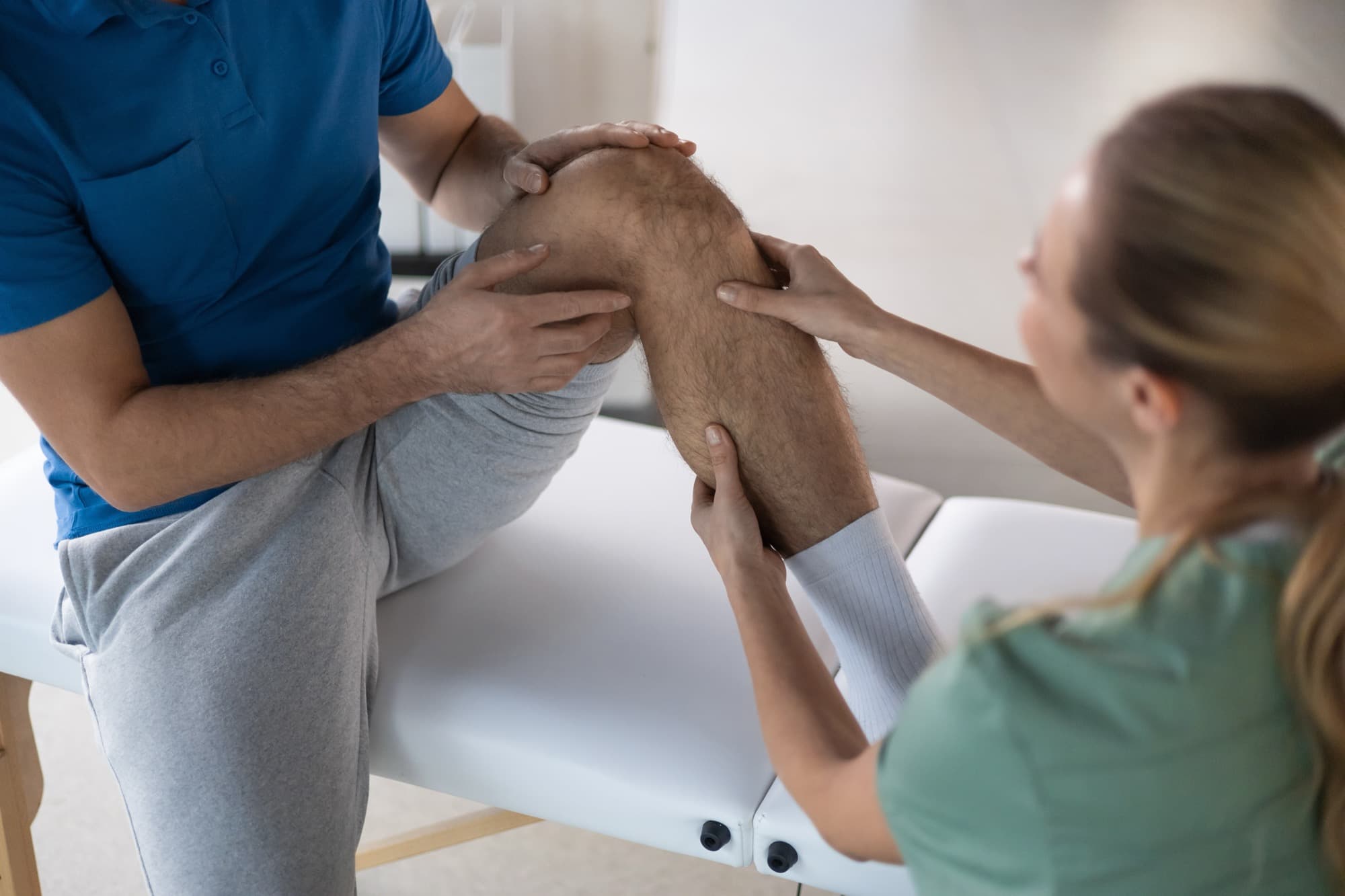
- Targeted physical therapy — Our physical therapist, Rowena Calleja, PT, designs a condition-specific rehabilitation program focused on restoring function, strength, and mobility.
- Orthobiologic procedures — When a clinical evaluation supports it, we can discuss an autologous PRP or BMAC (bone marrow aspirate concentrate) procedure prepared from your own blood or bone marrow.
- Progress monitoring — We track objective metrics at regular intervals. If you’re not improving, we adjust the plan — or have an honest conversation about surgical referral.
- Ongoing support — Through our wellness membership program, patients can maintain their gains with continued access to care.
Why Integration Matters
Most clinics offer PT or injections or medications. We combine them under one roof with one coordinated care team. This matters because:
- Coordinating PT with a PRP procedure keeps care under one team for concerns like tendinopathy and early-stage osteoarthritis
- One team = better communication — your PT and your medical provider collaborate in real time
- Faster results — integrated care reduces total treatment time by addressing both the symptom and the source
Recovery Timeline: PT vs. Surgery Side by Side
Understanding what recovery actually looks like helps you make a more informed decision.
Knee Osteoarthritis
- PT route: 6–8 weeks of sessions (2–3x/week), gradual return to full activity by week 10–12. Minimal disruption to daily life.
- Surgical route (total knee replacement): 1–2 days in hospital, 6–8 weeks on crutches/walker, 3–6 months to full recovery, 12 months for complete healing.
Rotator Cuff (Partial Tear)
- PT route: 8–12 weeks of progressive rehab. Most patients return to full overhead activity by week 12–16.
- Surgical route (arthroscopic repair): Sling for 4–6 weeks, no overhead use for 3 months, full recovery at 6–9 months.
Meniscus Tear (Degenerative)
- PT route: 6–8 weeks. Many patients feel significant improvement by week 4.
- Surgical route (arthroscopic meniscectomy): 1–2 weeks on crutches, 4–6 weeks to full activity, potential for accelerated arthritis long-term.
Lumbar Spinal Stenosis
- PT route: 8–12 weeks of flexion-based exercises and core work. Ongoing maintenance exercises recommended.
- Surgical route (laminectomy): 2–4 week initial recovery, 3–6 months to full activity, 10–15% chance of symptom recurrence within 5 years.
How to Know If PT Is Right for You: A Quick Self-Assessment
Ask yourself these questions before your next appointment:
- Is your pain limiting function but not caused by a complete structural tear?
- Have you NOT yet tried a supervised PT program (home exercises don’t count)?
- Can you still perform basic daily activities, even if modified?
- Has your condition been present for less than 12 months?
- Are you willing to commit to 2–3 sessions per week for 6–12 weeks?
If you answered yes to 3 or more, you’re likely a strong candidate for conservative care.
If your pain is severe, worsening rapidly, or accompanied by neurological symptoms (numbness, weakness, loss of bladder/bowel control), seek evaluation immediately — surgery may be time-sensitive.
Take the Conservative-First Path
You don’t have to choose between suffering and surgery. At Innovare Tx, we offer a third option: expert, integrated conservative care that combines physical therapy, orthobiologic procedures, and experienced medical oversight.
Schedule your evaluation today. Call us at (214) 233-3094 or book online to find out if conservative care is right for you. We accept BCBS, Medicare, UHC, Cigna and offer Affirm/CareCredit financing for treatments not covered by insurance. We also proudly offer military and law enforcement discounts on self-pay services.
How do I know if I need surgery or physical therapy?
The best way to determine whether you need surgery or PT is a thorough clinical evaluation that includes physical examination and imaging review. In general, conditions with intact structural integrity respond well to physical therapy, while complete tears, unstable fractures, and severe nerve compression often require surgery. At Innovare Tx, we evaluate each patient individually and recommend the most conservative effective treatment first.
Can physical therapy help me manage knee pain before considering surgery?
For many patients, yes. Research published in the New England Journal of Medicine shows that adding arthroscopic surgery to physical therapy gives no extra benefit for knee osteoarthritis, and that physical therapy performs comparably to arthroscopic partial meniscectomy for degenerative meniscus tears. Some patients also ask about autologous orthobiologic procedures like PRP as part of a conservative plan; whether one is appropriate is determined by a clinical evaluation. We generally recommend a structured 8–12 week PT program before considering surgical options.
How long does physical therapy take compared to surgical recovery?
A typical PT program runs 6–12 weeks with 2–3 sessions per week, and most patients experience minimal disruption to work and daily life. Surgical recovery, depending on the procedure, ranges from 6 weeks to 12 months and often requires its own course of post-operative physical therapy. For equivalent conditions, PT gets you back to normal activity significantly faster.
Is physical therapy covered by insurance?
Most major insurance plans cover physical therapy, including BCBS, Medicare, UHC, and Cigna — all of which we accept at Innovare Tx. Coverage varies by plan, so we verify your benefits before your first visit. For services not fully covered, we offer Affirm and CareCredit financing.
What is the Innovare Tx approach to non-surgical care?
Our approach integrates physical therapy, autologous orthobiologic procedures (PRP, BMAC), and medical management into a single coordinated care plan. Rather than treating symptoms in isolation, our team — led by Charles Ortega, PA-C with 27 years of experience — takes a comprehensive view of your care. We monitor progress objectively and adjust your plan as needed, recommending surgery when it is the appropriate path.
What if physical therapy doesn’t work for my condition?
If you complete a full course of quality conservative care without meaningful improvement, we’ll have an honest conversation about next steps — including surgical referral. Trying PT first doesn’t close the door on surgery. In fact, patients who complete pre-surgical PT (“prehab”) tend to have better surgical outcomes and faster post-operative recovery when surgery does become necessary.
PRP, PPP, BMAC, and A2M are autologous procedures prepared from your own blood or bone marrow. They are considered investigational and are not FDA-approved for the treatment of any specific orthopedic condition, including osteoarthritis. Individual results are not guaranteed. Any decision to pursue an orthobiologic procedure should be made with your provider after a clinical evaluation.