

TL;DR: Five different things get called “a knee injection,” and they are not versions of each other. A corticosteroid injection delivers an anti-inflammatory medication and is a strong guideline recommendation for knee osteoarthritis. Hyaluronic acid is a gel-like preparation that guideline bodies disagree about. PRP, BMAC and A2M are autologous preparations made from your own blood or bone marrow — they are investigational and not FDA-approved for the treatment of any specific orthopedic condition. This article describes what each one is. It deliberately does not rank them, because ranking them would require efficacy claims nobody is entitled to make.
Why there is no comparison table here
You will find plenty of clinic pages with a grid comparing these injections on “how long the relief lasts” and “how often it works.” Those grids are marketing artifacts. For the autologous preparations in particular, the underlying claims are not supported by regulatory status or by consistent evidence, and presenting them in a tidy table gives false confidence about a genuinely uncertain area.
What we can do, and what is more useful anyway, is tell you exactly what each substance is, where it comes from, how it gets into your knee and what the major guideline says about it. Then an examination decides what is appropriate for your knee.
Corticosteroid (cortisone) injection
What it is: an anti-inflammatory medication, delivered into the joint space.
Guideline position: intra-articular glucocorticoid injection is a strong recommendation for knee osteoarthritis in the 2019 American College of Rheumatology and Arthritis Foundation guideline. Its effect is typically temporary.
Worth knowing: most practices limit repeat injections into a single joint to roughly three or four a year, which is a caution-based convention rather than a hard rule. More usefully, a knee that needs an injection every few months to be tolerable is a knee whose underlying plan is worth revisiting — the injection is managing the symptom, and something else should be addressing the load.
Hyaluronic acid (viscosupplementation, “gel shots”)
What it is: an injection of a gel-like substance related to a natural component of joint fluid.
Guideline position: this is the one guideline bodies openly disagree about. The 2019 ACR and Arthritis Foundation guideline makes a conditional recommendation against intra-articular hyaluronic acid for the knee, while noting that the recommendation is not intended to drive insurance decisions and that shared decision-making applies when other options have been exhausted. Other organizations take a different view.
Worth knowing: if a clinic offers it, it is entirely fair to ask which guideline it is relying on and why.
PRP — platelet-rich plasma
What it is: a concentration of the platelet fraction of your own blood.
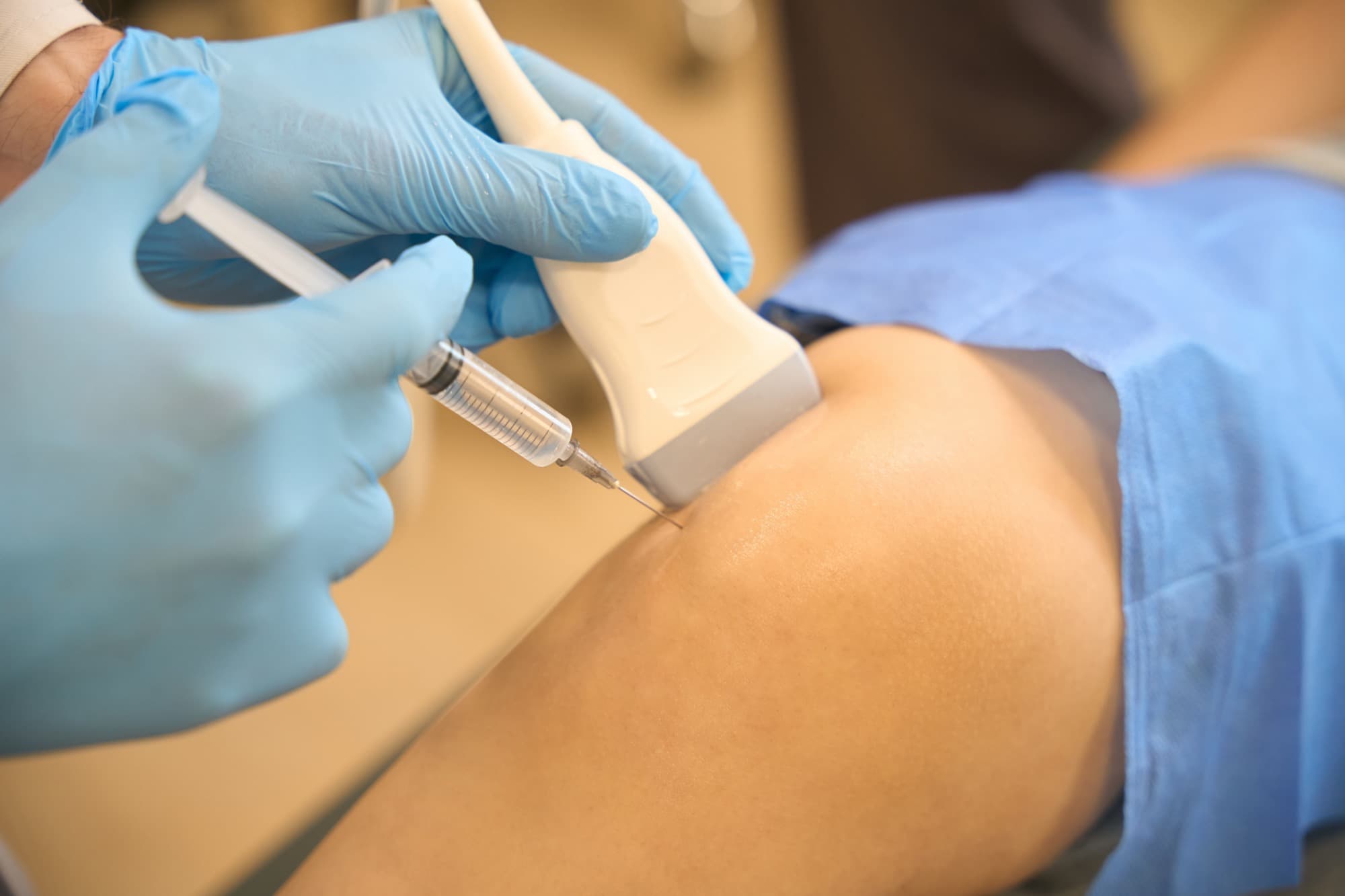
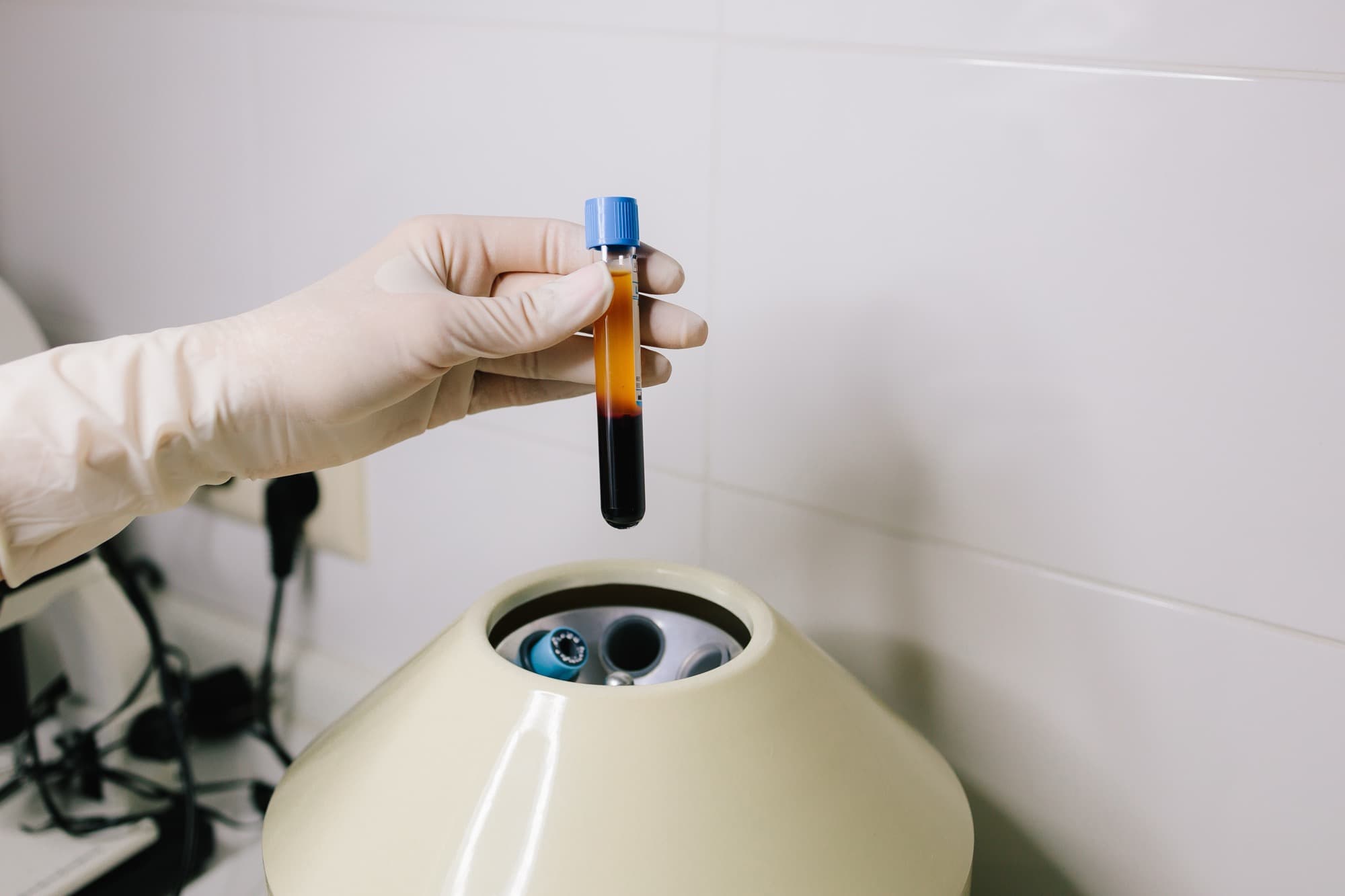
How it is prepared: a small blood sample is drawn in the clinic, spun in a centrifuge to separate and concentrate the platelet fraction, and the preparation is delivered by injection under ultrasound or fluoroscopic guidance during the same visit. It is autologous and minimally manipulated.
Status: investigational. Not FDA-approved for the treatment of any specific orthopedic condition, including osteoarthritis. Not covered by insurance. More detail in how PRP injections are prepared.
BMAC — bone marrow aspirate concentrate
What it is: a concentrate prepared from your own bone marrow rather than your blood.
How it is prepared: a small marrow aspirate is drawn under local anesthetic, usually from the pelvis, concentrated in a centrifuge, and delivered by image-guided injection in the same appointment. Also autologous and minimally manipulated.
Status: investigational, on the same footing as PRP. See BMAC and PRP compared as procedures.
A2M — alpha-2-macroglobulin
What it is: a large protease-inhibitor protein that occurs naturally in blood, concentrated from your own sample.
How it is prepared: from an autologous blood draw, using a concentration process, then delivered by image-guided injection in the same visit.
Status: investigational. Same disclosure applies.
What image guidance is, and what it is not
Every injection above can be placed either by surface landmarks or under ultrasound or fluoroscopic guidance. Guidance means the needle is placed under direct vision rather than by inference. That is a statement about accuracy of delivery. It is not a statement about what the delivered material does once it is there, and anyone who blurs the two is telling you something about their sales process.
Two things nobody should be injecting into your knee
Innovare Tx does not offer, and would encourage you to question, anything marketed as stem cell therapy, and anything derived from donors — amniotic, umbilical or exosome products — or adipose-derived stromal vascular fraction, which the FDA regulates as a drug. Our procedures are autologous only: from you, for you, in the same visit. The definitions are in the glossary.
How the decision actually gets made
By evaluation. Your imaging, your history, your goals and your general health determine which of these — if any — is appropriate, and the conversation happens after someone has examined the knee rather than before. Nothing on this page is a recommendation for your knee. Start at the knee evaluation, or read the orthobiologic options in full.
Are PRP and BMAC covered by insurance?
No. Because they are considered investigational and are not FDA-approved for the treatment of any specific orthopedic condition, insurers do not reimburse them. They are cash-pay and are quoted in writing after an evaluation — see costs and insurance.
Can I have PRP if I have already had cortisone?
Previous injections do not automatically rule anything out, and knowing what you have had and when is genuinely useful information — how well a joint responded to an intra-articular injection, and for how long, tells us something about the joint. Bring the dates.