

TL;DR: Many rotator cuff problems — tendinopathy, partial tears, and impingement — are often managed with conservative care. A structured plan built around physical therapy is the evidence-based foundation, and some patients also ask about autologous orthobiologic procedures like PRP or BMAC, which use biologic material from your own body. Whether one is appropriate is determined by a clinical evaluation. Full-thickness tears and major trauma may still need surgical repair. Learn more about shoulder pain care at Innovare Tx in Addison, TX.
Hearing “rotator cuff tear” can sound like an automatic ticket to surgery. In reality, a large share of rotator cuff problems are managed successfully without an operation — and even some partial tears do well with the right conservative care. The trick is matching the treatment to the injury.
Understanding the Rotator Cuff
The rotator cuff is a group of four muscles and their tendons that stabilize the shoulder and let you lift and rotate your arm. Problems usually fall into a few categories:
- Tendinopathy — wear and irritation of the tendon from overuse or age.
- Impingement — the tendon getting pinched during overhead movement.
- Partial-thickness tears — the tendon is frayed or partly torn but not severed.
- Full-thickness tears — the tendon is torn all the way through.
That last category is the most likely to need surgical evaluation — but the first three often respond well to non-surgical care.
The Foundation: Physical Therapy
For most rotator cuff problems, structured physical therapy is the cornerstone of treatment — and the evidence supporting it is strong. A good program addresses not just the cuff itself but the whole shoulder mechanism:
- Rotator cuff and scapular strengthening to restore stability and control.
- Posture and movement retraining to reduce impingement during daily tasks.
- Mobility work to restore pain-free range of motion.
- Activity modification so you stay functional without re-aggravating the tendon.
Our physical therapist, Rowena Calleja, PT, works directly with patients to rebuild shoulder strength and protect the tendon — whether that’s the whole plan or part of a combined approach.
Orthobiologic Procedures for the Shoulder
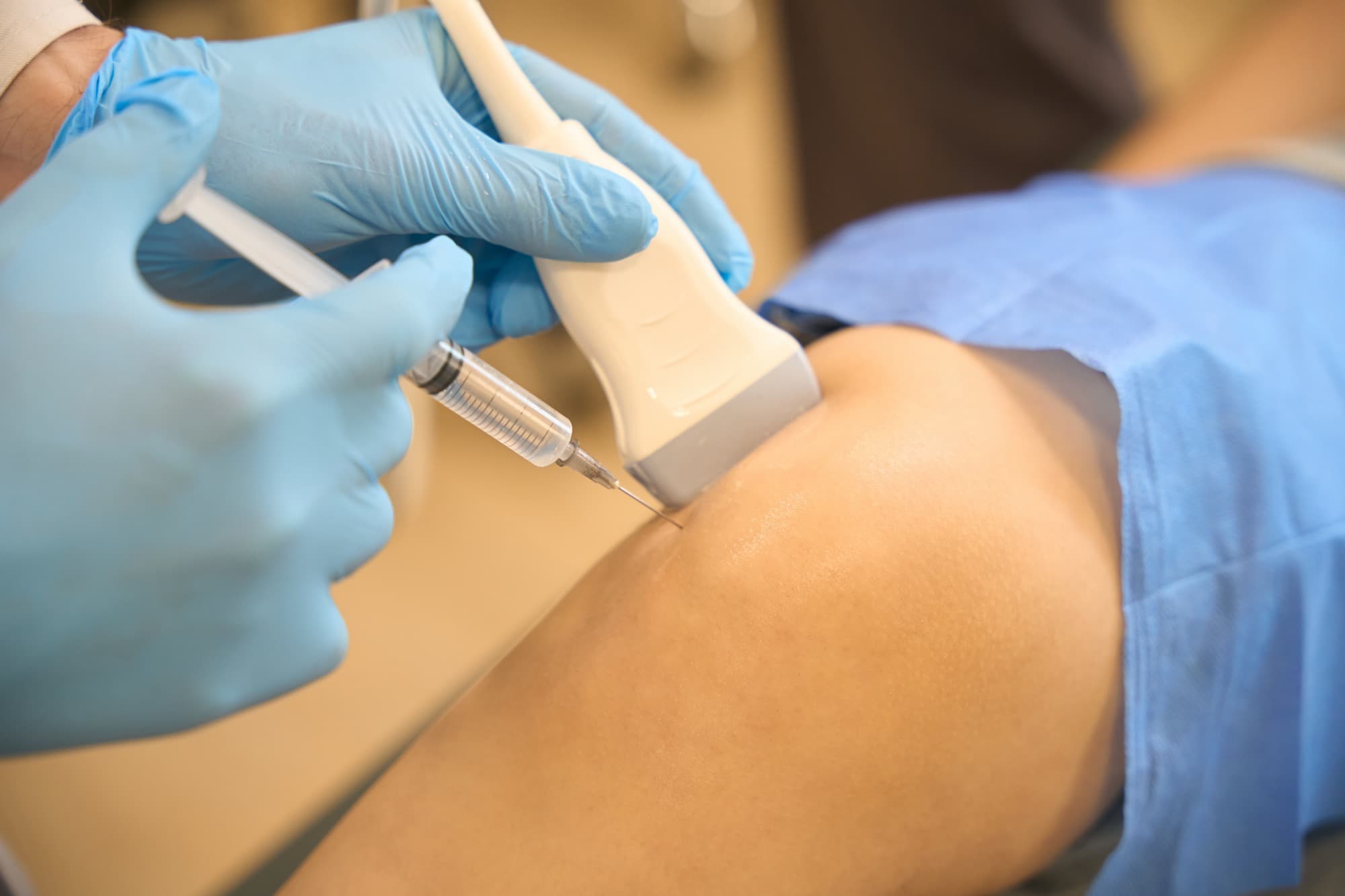
When pain and tendon irritation persist despite rehab, some patients ask about autologous orthobiologic procedures, which use biologic material prepared from your own body and delivered by image-guided injection.
PRP (Platelet-Rich Plasma)
PRP concentrates the platelets and growth factors from your own blood, which are delivered to the shoulder with image guidance. It is sometimes discussed for rotator cuff tendinopathy and partial tears that haven’t fully responded to therapy; candidacy is determined by a clinical evaluation.
BMAC (Bone Marrow Aspirate Concentrate)
BMAC is a more cellular preparation drawn from your own bone marrow, and it is sometimes discussed as part of our orthobiologic program. Both procedures use your own adult tissue — no donor material, and because the material is your own, minimal risk of rejection.
Matching Treatment to the Injury
| Condition | Typical non-surgical approach |
|---|---|
| Tendinopathy / impingement | Physical therapy first; an orthobiologic procedure (PRP) may be discussed if persistent |
| Partial-thickness tear | Physical therapy; an orthobiologic procedure (PRP or BMAC) may be discussed after evaluation |
| Full-thickness tear | Surgical evaluation; rehab plays a key role before and after |
| Acute traumatic tear in an active adult | Prompt surgical evaluation |
Why a Coordinated Approach Matters
Many patients do best when care is coordinated. Physical therapy rebuilds the strength and control that support the shoulder, and it is the evidence-based foundation of conservative rotator cuff care. When an orthobiologic procedure is part of the plan, coordinating it with rehab under one roof keeps everyone on the same page. That’s why we coordinate both together.
When Surgery Is the Right Call
Non-surgical care isn’t right for every shoulder. Large full-thickness tears, acute traumatic tears in active patients, and shoulders that fail a well-run course of conservative treatment may genuinely need surgical repair. A thorough evaluation with imaging helps us tell the difference and give you an honest recommendation — the goal is the right treatment, not avoiding surgery at any cost.
Can rotator cuff problems improve with non-surgical care?
Tendinopathy, impingement, and many partial tears are often managed with non-surgical care — physical therapy and activity modification, and, where a clinical evaluation supports it, an autologous orthobiologic procedure like PRP. Full-thickness tears usually warrant surgical evaluation. An imaging-based assessment is the best way to understand which group your injury falls into.
What does a PRP procedure involve for the shoulder?
A PRP procedure concentrates the platelets and growth factors from a sample of your own blood and delivers them to the shoulder with image guidance. It is sometimes discussed alongside a structured rehab plan for tendinopathy and partial tears. Any changes develop gradually, and individual results vary and are not guaranteed. A provider can advise whether it is an appropriate option for your specific injury after a clinical evaluation.
How long does non-surgical rotator cuff recovery take?
It varies with the injury and the plan, but conservative rotator cuff care generally unfolds over weeks to a few months as strength and tendon health rebuild. Consistency with physical therapy is the biggest factor. To build a shoulder plan, contact Innovare Tx at (214) 233-3094 or learn more about our physical therapy program.
PRP, PPP, BMAC, and A2M are autologous procedures prepared from your own blood or bone marrow. They are considered investigational and are not FDA-approved for the treatment of any specific orthopedic condition, including osteoarthritis. Individual results are not guaranteed. Any decision to pursue an orthobiologic procedure should be made with your provider after a clinical evaluation.