TL;DR: Surgery isn’t always the first step for knee arthritis or many knee injuries. Conservative-care options include targeted physical therapy and activity and weight modification — the most evidence-backed approaches for knee osteoarthritis — as well as autologous orthobiologic procedures like PRP and BMAC, which use biologic material from your own body. The right plan depends on the cause and severity of your knee pain and on a clinical evaluation. At Innovare Tx in Addison, TX, we offer orthobiologic procedures alongside structured physical therapy for a coordinated approach.
Knee pain is one of the most common reasons adults visit a clinic — and one of the most common moments people are told surgery is “the only option left.” For some severe cases, that’s true. But for a great many people with knee arthritis, meniscus issues, or chronic tendon problems, there’s a meaningful path that doesn’t start in an operating room.
Here’s a clear look at the non-surgical options worth understanding first.
Why Knees Hurt
Most non-traumatic knee pain comes from one of a few sources:
- Osteoarthritis — the gradual wear of cartilage that cushions the joint.
- Tendon and ligament problems — patellar tendinopathy, strains, or irritation from overuse.
- Meniscus injuries — many degenerative meniscus tears respond well to conservative care.
- Muscle imbalances — weak hips or quads that overload the knee.
Identifying the actual source matters, because it determines which non-surgical option is most likely to help.
Foundation: Movement, Strength, and Load
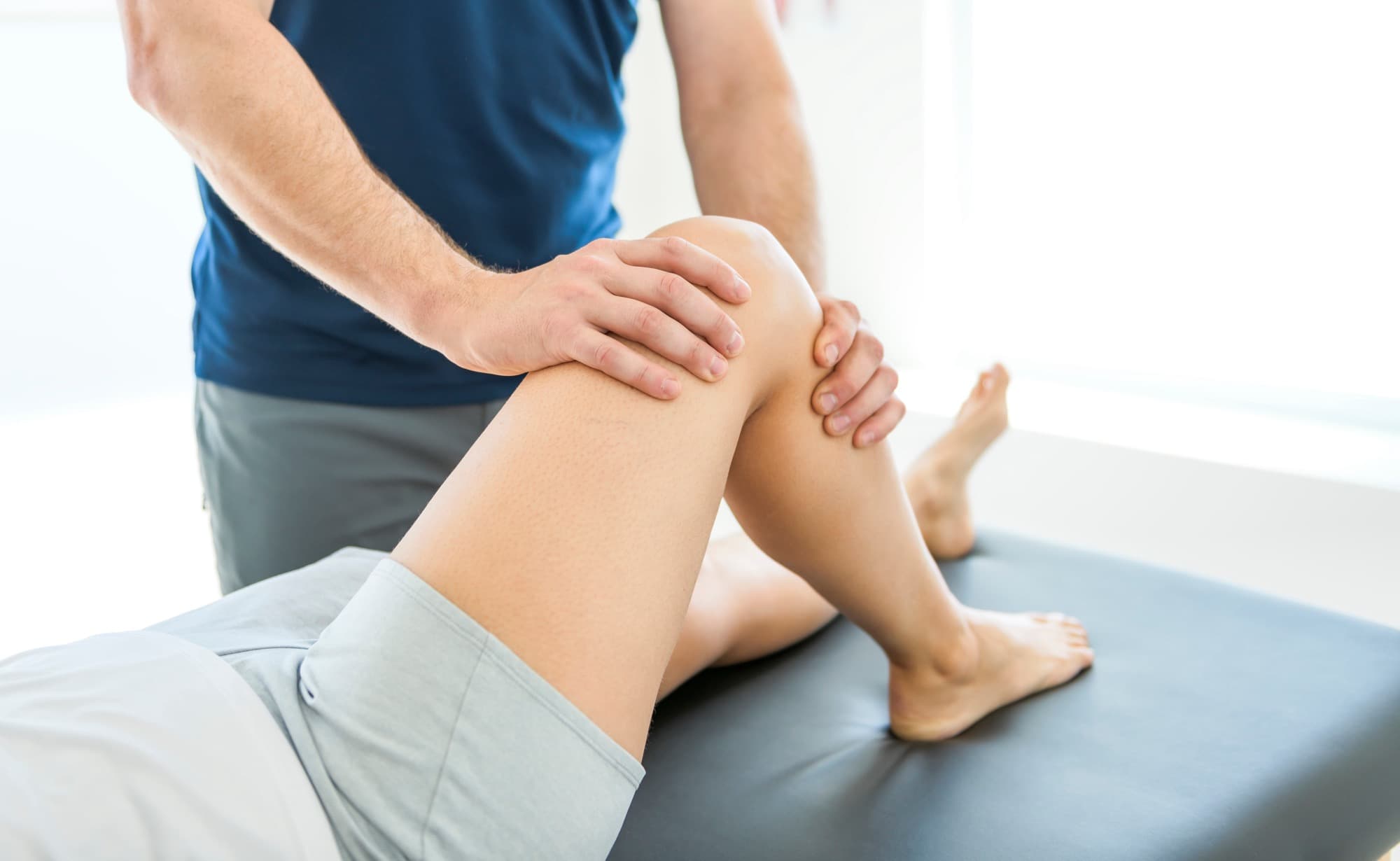
Before — and alongside — any procedure, the single most evidence-backed treatment for knee osteoarthritis is structured exercise and physical therapy. It may sound too simple, but the research is consistent: strengthening the muscles around the knee, improving mobility, and correcting movement patterns can meaningfully reduce pain and improve function.
A well-built physical therapy plan focuses on:
- Quad and hip strengthening to offload the joint.
- Mobility and balance work to restore confident movement.
- Activity modification so you stay active without flaring the joint.
- Body-weight support — even modest weight reduction lowers the load through the knee with every step.
Orthobiologic Procedures: PRP and BMAC
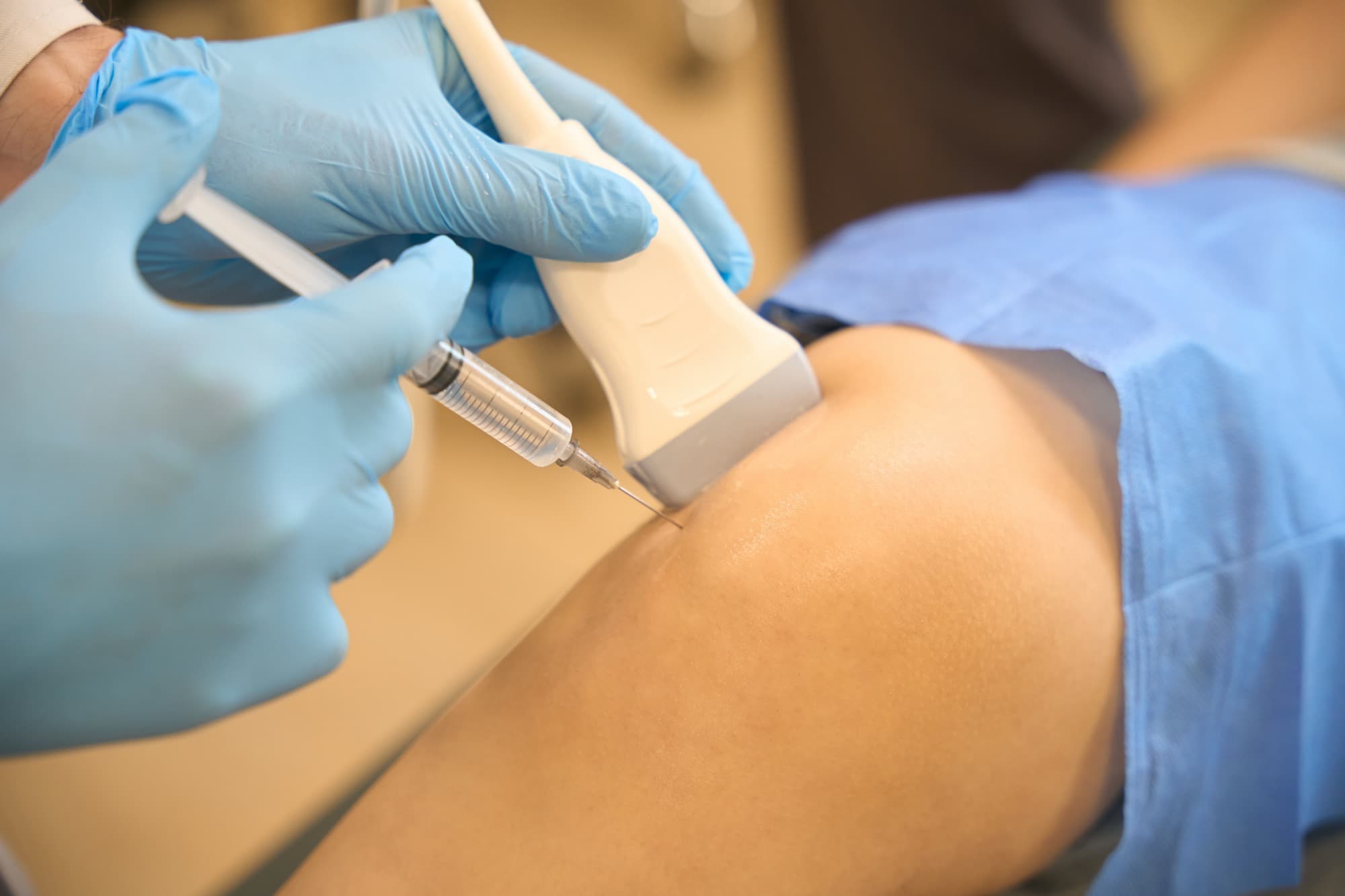
When knee pain persists despite conservative care, some patients ask about autologous orthobiologic procedures, which use biologic material prepared from your own body and delivered by image-guided injection.
PRP (Platelet-Rich Plasma)
PRP concentrates the platelets and growth factors from a sample of your own blood, which are then delivered into the knee with image guidance. Whether PRP is an appropriate option is determined by a clinical evaluation.
BMAC (Bone Marrow Aspirate Concentrate)
BMAC is prepared from your own bone marrow and includes a cellular fraction in addition to growth factors; it is sometimes discussed for more advanced joint changes. Curious how they differ? We break it down in our BMAC vs PRP comparison.
Both are same-day, autologous procedures using your own tissue — no donor material, and because the material is your own, minimal risk of rejection.
Comparing the Non-Surgical Options
| Option | Best for | What to expect |
|---|---|---|
| Physical therapy | Nearly all knee pain; the foundation of any plan | Gradual, lasting gains in strength and function over weeks |
| Weight & activity modification | Arthritis and overuse-related pain | Reduced joint load; supports every other treatment |
| PRP (autologous orthobiologic procedure) | Discussed after evaluation; blood-derived preparation | Same-day, image-guided injection; results vary and are not guaranteed |
| BMAC (autologous orthobiologic procedure) | Discussed after evaluation; bone-marrow-derived, more cellular preparation | Same-day, image-guided injection; results vary and are not guaranteed |
Why a Coordinated Approach Matters
Many patients do best when care is coordinated rather than piecemeal. Physical therapy builds the strength and movement patterns that support the knee, and it is the evidence-backed foundation of any plan. That’s the philosophy behind our integrated model: orthobiologic procedures and physical therapy coordinated under one roof, not in separate silos.
When Surgery Still Makes Sense
Non-surgical care isn’t right for everyone. Severe, end-stage arthritis with bone-on-bone changes, certain unstable tears, and acute traumatic injuries may genuinely require surgical repair or joint replacement. A thorough evaluation with imaging helps us tell the difference — and we’ll tell you honestly if surgery is the better path. The goal is the right treatment, not avoiding surgery at all costs.
Can knee arthritis be managed non-surgically?
For many people, conservative care is a reasonable first step. Mild-to-moderate knee osteoarthritis often responds well to physical therapy and weight and activity modification, which are the most evidence-backed non-surgical measures. Some patients also ask about autologous orthobiologic procedures such as PRP; whether one is appropriate is determined by a clinical evaluation. Advanced, bone-on-bone arthritis may still require surgery.
How do I know if I need surgery or another option?
It depends on the cause and severity of your knee problem, which an evaluation with imaging can clarify. Many degenerative meniscus tears and earlier-stage arthritis do well with conservative care, while severe structural damage may need surgery. A provider can give you an honest assessment of where you fall on that spectrum.
How long does conservative knee care take?
Physical therapy produces gradual gains over several weeks. Autologous orthobiologic procedures work on your body’s biological timeline, and individual results vary and are not guaranteed. These are biological and rehabilitative processes, so they reward consistency and patience rather than promising an overnight fix. To build a plan for your knee, contact Innovare Tx at (214) 233-3094.
PRP, PPP, BMAC, and A2M are autologous procedures prepared from your own blood or bone marrow. They are considered investigational and are not FDA-approved for the treatment of any specific orthopedic condition, including osteoarthritis. Individual results are not guaranteed. Any decision to pursue an orthobiologic procedure should be made with your provider after a clinical evaluation.